Addictive Design
The user interacts with the product excessively, because its design exploits psychological vulnerabilities to foster compulsive behaviour.
Definition
Addictive design is a broad category of different patterns. It includes UI designs and system behaviours that exploit known psychological vulnerabilities to drive compulsive behaviour, resulting in the user spending excessive money, time or effort against their own interests. Not all design that drives compulsive behaviour leads to addiction, which is an outcome that occurs only in some individuals. In recent years, behavioural (non-substance) addiction has been recognised by the American Psychiatric Association, who added "Gambling Disorder" to the DSM-5; and the World Health Organisation, who recognised "gaming disorder" as a clinically recognisable and significant syndrome. Addictive design is believed to encompass patterns such as variable reward schedules, loot boxes, infinite scroll, pull-to-refresh, autoplay, streaks, daily rewards, playing by appointment, and social validation loops.
Example
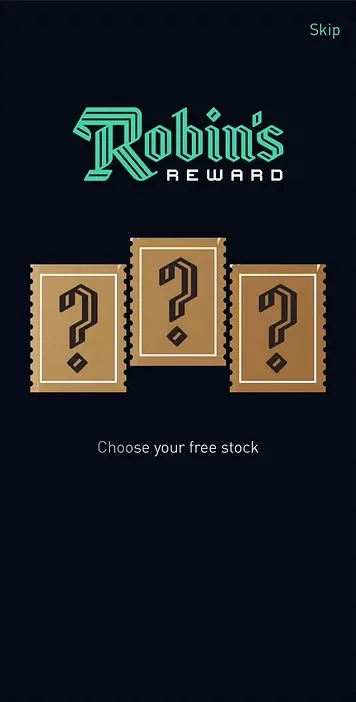
Robinhood is a stock trading app that has been criticised for using addictive design and gambling-like interaction mechanics. It has been accused of incorporating “constant notification and nudges”, “one-tap trading” and “celebratory animations”; and it is described as a “‘casino-like’ environment” that “promoted an impulsive, emotional investing style at odds with long-term financial health.” (Hsiao, 2024). In 2018, Robinhood featured a “Scratch off reward” feature pictured below, which worked like a lottery scratch card - “scratching” off the foil via your smartphone’s touchscreen revealed a single share of stock, gamifying and trivialising the act of investment, which, depending on the user's subsequent behavior, can result in financial losses. Even today in 2026, Robinhood still rewards users with one random share when they join up, to quote: “We’ll add 1 share of free stock to your account when your brokerage application is approved. [...] The shares of free stock are chosen randomly [...] The value of the share you receive may be anywhere between $2.50 and $200 [...]”. (Robinhood, 2026). This randomisation of reward is known as a “variable reward schedule” and it is regarded as a mechanism that can facilitate addiction (Clark & Zack, 2023).
Image source: Tory Hobsom, 2018.
 1 / 5
1 / 5References
Attention capture deceptive designs (Monge Roffarello et al., 2023), hyper-engaging dark patterns (Esposito & Maciel Cathoud Ferreira, 2024), variable reward schedules (Clark & Zack, 2023), infinite scroll (Monge Roffarello et al., 2023), pull-to-refresh (Monge Roffarello et al., 2023), autoplay (Monge Roffarello et al., 2023), streaks (Hristova et al., 2020), loot boxes (Zendle & Cairns, 2018), daily rewards (Zagal et al., 2013) and playing by appointment (Zagal et al., 2013).